THE FIRST STEP TO HARVESTING LIQUID GOLD
TAPPING MAPLE TREES
The majority of the trees in our sugar bush are red maples, which typically yield lower sugar content in their sap.
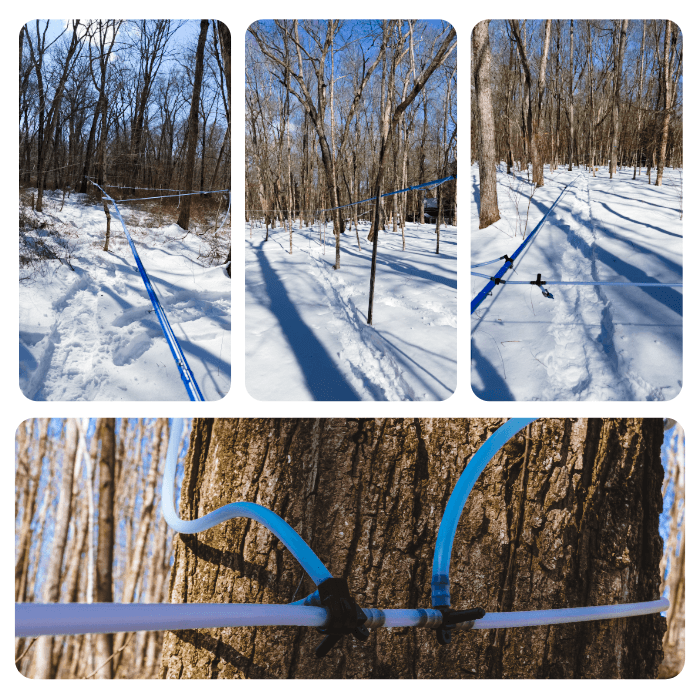
We currently tap about 350 trees and use a food-grade tubing system and vacuum pump to collect sap in large stainless steel tanks.
On average, the sugar content (called brix) in the sap is 1.5%. The remaining 98.5% is water. At this ratio, it takes about 57 gallons of sap to make one gallon of syrup.
We practice sustainable tapping and use precise tap spacing, seasonal limits, and regular health inspections so that each maple tree continues to grow and produce sap for generations.
CONCENTRATING SUGARS AND DEEPENING FLAVORS
REDUCING SAP TO SYRUP
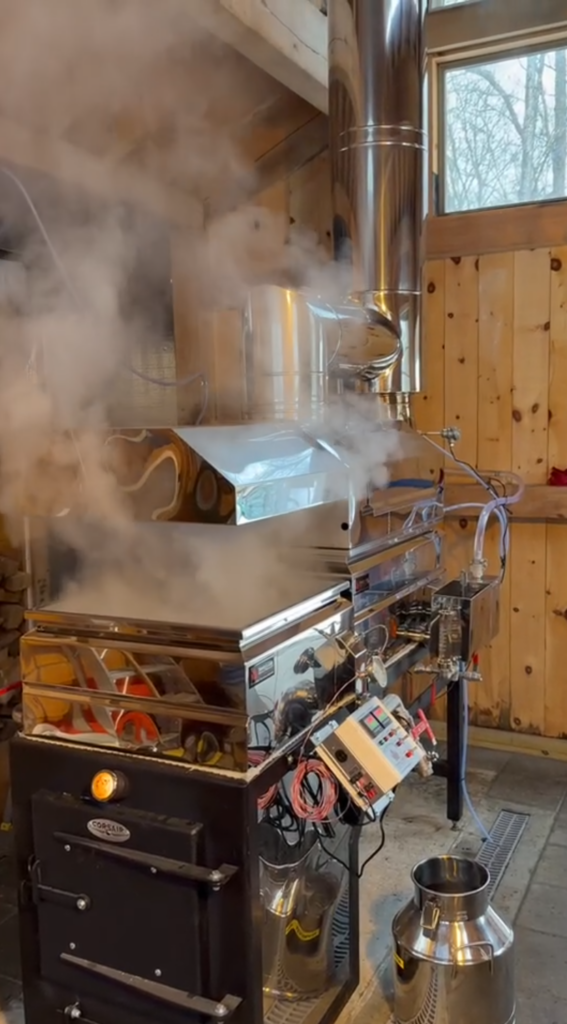
Once the sap is collected, it is passed through a reverse osmosis machine, which uses membranes to separate the water from the sugar content in the sap. Our reverse osmosis machine can concentrate the sugar content of the sap up to 8% brix. The reverse osmosis machine greatly reduces the amount of boiling time needed to turn sap into maple syrup.
The concentrated sap is boiled using a wood-fired evaporator. An evaporator is made from stainless steel and performs exactly as its name implies. Fire is used to heat the sap to a boil, which releases water in the form of steam. Once the sap reaches 219 degrees, it becomes syrup.
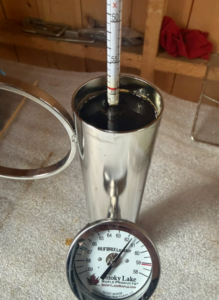
The syrup is drawn off from the evaporator and checked for density. The density check is performed with a hydrometer to confirm that the syrup reaches the correct density. If the density is too low, the syrup can spoil. If the density is too high, sugar rock crystals can form inside the syrup bottle.
SEALING THE DEAL WITH OUR SWEET CREATION
FILTERING AND BOTTLING
Once the syrup is collected, it is filtered and bottled. Unfiltered syrup has sugar sand (also known as niter) and other impurities, which is the heavy, gritty material left at the bottom of a bottle of unfiltered syrup. We use food-grade diatomaceous earth as a filter aid to remove the niter. The syrup is pushed through a filter press that will remove all impurities, and you are left with crystal clear syrup.
The filtered syrup is then bottled at a temperature between 180 and 190 degrees. This ensures sterile conditions are maintained during the bottling process.
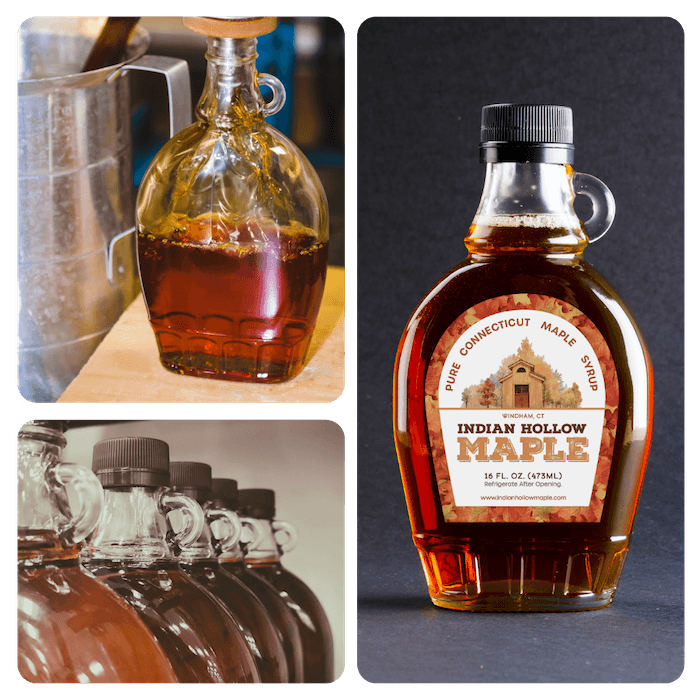
Once the syrup has been bottled, we apply our label that identifies the contents, manufacturer, and volume. We currently offer maple syrup bottles in 8-ounce, 12-ounce, and 16-ounce sizes.
ALL THINGS INDIAN HOLLOW MAPLE
FREQUENTLY ASKED QUESTIONS
New batches of our syrup is produced late February / early March. We make limited high quality batches that are bottled and are available until sold out.
Indian Hollow Maple is appreciated for its bright, complex, not overly sweet taste, and consistent flavors lovingly made with responsible tapping and mindful processing methods.
Buying local supports local family farms and allows us to reinvest in state of the art equipment. We are able to produce high quality maple syrup, with the freshest flavors and a backstory to tell at brunch.